Showing posts with label Black males. Show all posts

Monday, July 30, 2018

Liberation List by Kyle Phoenix: New LGBTQSGL Summer Read Challenges Notions of Black Masculinity

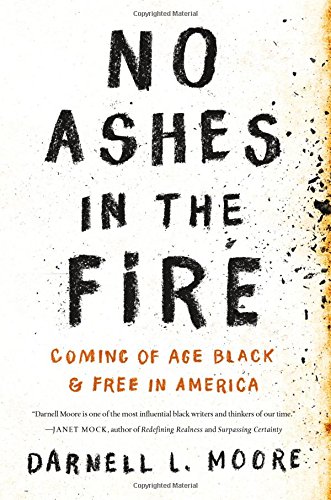
Hardships. Growing pains. Revelations. Triumphs. Victories. Being a free black man in America has its advantages as well as disadvantages and Darnell L. Moore’s No Ashes in the Fire: Coming of Age Black and Free in America is a journey by a member of the LGBTQ community that many of us can relate to. Born into tough circumstances; his ideal of masculinity questioned, the Camden, New Jersey-reared author stopped running from himself, confronted his enemies, and fully realized his lifelong purpose. Moore opens up about his life in a curated recollection that provides a look inside how society, whether your secular orientation and socio-economic strays, is shaped by cultural  and sub-cultural normals alike.
1568589484
Black Enterprise: This project, No Ashes in the Fire: Coming of Age Black and Free in America, is not a tell-all. What is the best way to describe this book?
Moore: “It’s a memoir that is both a personal and a social study into a complex, beautiful and messy world of a young black person who came of age in an era that forced one to wear the mask as well as bite the bullet in order to survive. I tried my best to offer snapshots of my life, and the various forces that shaped me.
Healing and survival, and in your case, death, are central themes throughout this book. How are your own interactions with youths grappling with these themes similar to your own?
I was honest about my dances with depression and suicidal attempts in the book. But I was also honest about the many people who aided in my survival. We cannot expect young people to be so strong and so self-loving as to navigate life on their own. Young people need communities who can wrap them in support. I’ve spent a little more than two decades working with young people in my role as an educator, therapist, program director, and much more. I’ve spent a considerable amount of that time working with LGBTQ youth of color.
LGBTQ

Pride Month seems to be more important than ever given the current administration’s stance on gay rights and the more recent Supreme Court ruling in favor of the Colorado baker refusing to serve a same-sex couple. But we have positives: FX’s Pose and Viceland’s My House, which both highlight the black and Latino ballroom scene. Just as those ‘houses’ serve as a sense of community how will your book foster the same?
I wrote the book for the 16-year-old version of me. I wrote it for young people, and the many individuals and institutions charged with their care. I hope that black young people can see semblances of themselves, as well as their struggles and joys, in it. And I hope some reader will feel as if they are understood.
What advice or steps would you give aspiring authors on the art of writing a book from conceptualizing to securing a deal to completion to marketing?
Know what it is you want to write. Know who it is you are writing to and in conversation with. Be clear. Be specific. And know the reason you want to write a book before beginning the journey to publishing. Talk to folks who have written published books. All of my connections, to my agent and publishing house, were forged by friends and writing peers. Build a community of peers and through that community; reach out to people who may be able to help you.
Orators and oral history are mentioned several times starting with your great-grandmother to work as a feminist, activist, and Black Lives Matter supporter. Touring, with numerous stops in small and renowned bookstores, allows your readers to connect with you on a more spiritual, personal level. What voice will readers discover throughout this memoir?
It’s an honest and vulnerable voice. Sometimes it’s sermonic. Sometimes it’s poetic. Sometimes it’s analytical. But it’s always gesturing toward a love for black people.
How has queerness and masculinity appeared in your life and shaped your character throughout the years?
The idea of manhood and masculinity have functioned like cages in my life. I am finally getting free. Cages aren’t doorways. Queerness, or rather, defying norms and rules have been a key to my freedom. It’s been a journey, and still is, but it’s been worth it.

Smile, Kyle
KylePhoenixShow@Gmail.com


You can Like or; Follow Us on Facebook or;Twitter

Or Click Below to:
·                     Kyle Phoenix Website
·                     The Kyle Phoenix Blog
·                     Check out Kyle Phoenix Products on Amazon .com


Friday, February 1, 2013

For Gay Black men, Coming Out can Feel Like Failure


Image result for black males coming out


For gay black men, coming out can feel like failure


Black parents often feel guilty when they learn their child is gay and many African-American gay youths before coming out distance themselves from their parents. "The world already sees you as less than others. By being gay, you're further hurting the image of African-American men," says Michael C. LaSala.

RUTGERS (US) — Gay black men face a unique set of challenges and pressures from family and friends when they decide to come out, research shows.

“Parents and youths alike worry that gay men cannot meet the rigid expectations of exaggerated masculinity maintained by their families and communities,” says Michael C. LaSala, associate professor at Rutgers University School of Social Work.

LaSala recently completed an exploratory study of African-American gay youth and their families from urban neighborhoods in New York City and Philadelphia. The findings were published in the Journal of GLBT Family Studies and co-authored with Damien T. Frierson from Howard University. The research focused on gay black males, ages 19 to 25, and their families.

‘One more strike against you’

Gay black males struggle to cope with intersecting oppressions—racism, homophobia, and sexism, says LaSala.

They carry a “special stigma” that some straight black males may find particularly disturbing. “The world already sees you as less than others. By being gay, you’re further hurting the image of African-American men,” LaSala says was a common reaction among the male relatives of the black youth when they learned that their relative was gay.

Straight from the Source

Read the original study

“On a clinical level, targeted interventions, especially those that include the young man’s biological father or a father figure, can assist families to cope with what for many is an unexpected and troubling reality,” says LaSala, who works with gay youths and their families in private practice and outlines interventions for families in transition.

Child-rearing for the parents of a black son can be especially daunting, given the increased risk for poverty, HIV/AIDS and other illnesses, and imprisonment faced by African- American men.

Black parents often feel guilty when they learn their child is gay and many African-American gay youths before coming out distance themselves from their parents.

In his study, LaSala observed that many parents found that having a confidante with whom they could share emotions helped them realize that their sons’ sexual orientation was not caused by faulty parenting, and that they risked losing their child if they could not accept his being gay.

Black parents may be less likely than whites to “mourn the loss of a normal life” for their gay sons, perhaps understanding that a normal life was less of a sure thing, according to LaSala.
“I found that parents of African-American gay youth said, ‘You have everything going against you as a black man. This is one more strike against you.’ Conversely, parents of white gay youth stated, ‘You have everything going for you—and now this!’” LaSala explains.
‘It’s a masculinity thing’

Gender role concerns are a repetitive theme for young African-American men and their families. One young man in the study described the African-American community as very strict when it comes to homosexuality. “It’s a masculinity thing,” he says.
LaSala points to existing research that calls upon black men to be hypermasculine, a trait characterized by the absence of overt emotions and the appearance of vulnerability, as well as a readiness to have sex at any time.

When gay black men realize they don’t fit the stereotype, they often develop a sense of alienation, loneliness, and anxiety, not knowing where they fit in.

LaSala recalls the words of a black single mother in the study who worried about gender expectations in her community: “You are told to be a man and being a man does not mean you sleep with other men,” she said. “Being a man means you have a woman and you procreate and continue the family name.”
The involvement of a young gay man’s biological father or a father figure can be crucial to relationship building. Too many family therapists and social workers accept the mother’s explanation that their son’s father “isn’t in the picture,” which is too easy a way out, according to LaSala.

“Family discussions can lead to expanded and more flexible views of masculinity, so clinicians must engage the youth’s father if at all possible,” he says. “A father is an essential part of the child’s history and can add a lot to the discussion.”

Enjoy!!!
Thank you for reading,
Kyle Phoenix
Email: kylephoenixshow@aol.com
Website: http://kylephoenixsite.com/
Blog: http://kylephoenixshow.blogspot.com/2012
Thanks and enjoy! You can Like Us on Facebook or Follow Us on Twitter! Don't forget to watch The Kyle Phoenix Show on Channel 56 (Time Warner), 83 (RCN), 34 (Verizon) and the Thursday/Friday 12am/midnight simulcast