
One, its based on Ericsson's theory. Which is more expansive and detailed than just 10k of rote activity and practice. Always go to the original study to judge. Two, in all of the answers I've read, none are from teachers. Teachers are essentially"mind-learning doctors" because we spend so much time translating reality and at the same time mapping a students mind and capacity to learn.
Non-teachers see learning the way a viewer sees a moving car. Teachers see learning from the perspective of an engineer within the car with a laptop showing the real time processes.
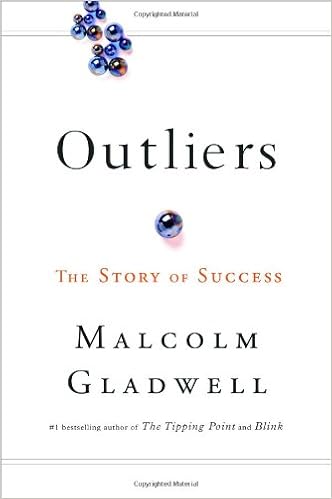
Outliers: The Story of Success
The social problems with the 10k rule is that, people want things faster. 10k is a seemingly big number. Until you see that a college 4 years is close to 10k hours. Of course in college you have a variety of classes, at least 40-50, with 25 being a varied assortment of required courses. So you tack on a masters degree and you're closer to getting a focused 10k in a subject. But college does teach people on a broader passive way how to learn through instruction, rote, studying, research etc and hopefully the student will learn which style they excel at.
If you go to school for computers, you didn't spend enough time to achieve 10k, hence why an employer, acting as an advanced mentor would expose you to and train you in more.
If you go to school for computers, you didn't spend enough time to achieve 10k, hence why an employer, acting as an advanced mentor would expose you to and train you in more.
Most educational systems attempt to be broad so that its generally individualistic learners who can pursue 10k of hours because they can devote 100% of their time to say writing without being required to go to a math or science class or vice versa.
I walked into undergraduate school at 21 with a dozen full manuscripts of 250 plus pages each. I had a previous ten to fifteen years of writing tons of things--essays, newsletters, articles, poetry, plays, comic scripts, short stories, long stories, story boarding so I was advanced for an undergrad writer who then wrote for four ongoing magazine, journal, newspaper and chap books plus submitting to magazines and getting published nationwide. By my sophomore year I came to understand how the structure of school was hindering me so I padded my schedule with five reading and writing courses to one required course plus I worked as a TA for two award winning writer professors and was deeply invested in the works of others in group classes. Mentors and practical experience on the work of others taught me to write better. But I would estimate I walked in at 5000 to 7000 hours. Its not the number 10, 000 its the kind of work, exposure, variety, mentorship one gets that makes the 10k worth expertise.
Several friends /classmates wanted to be writers and I later came to understand experienced jealousy and envy at my advanced work and being picked by the professors to be their TA, one hadn't had one in over fifteen years because she judged students as not ready. She offered me the job because I had advanced myself---one by writing so much and two by reading so much. My grandmother read five books a week and I was always trying to keep up. I read my first adult book at 10 and didn't think I would get to college so I went to Barnes and noble and started at A, assuming that the books I did read I would encounter if and when I got to college. Two years of intense college level focused reading propelled me further from my normal prodigiousness to a more intense specialist level. I was ripe for the next necessary component of 10,000 expertise, intense attention from acclaimed, accomplished masters.
But you'd have to be both the viewer and a trained engineer to see that. I was teaching for years in a variety of corporate and adult then children then creative ways before I specifically have been able to identify teaching expertise and I'm still learning. But there came a point where I directly had to seek out mentors again, I would estimate at about 8000 hours of pure teaching but once I did work with them within a year I was a recognized expert by another expert who observed me teaching cold.
Even now with a mix of about 45k of hours in writing, teaching and reading I'm still learning and fascinated by what another twenty years will garner. But I do know its not a pure 10k of hours unless you start early, build and adjust your own learning by understanding learning levels.
To the point of a short span, I took about a dozen computer courses after undergrad...ms office, PhotoShop, illustrator, quark, Page Maker, Java, html, JavaScript from beginner to advanced level then years later formal desktop support tech classes and systems administrator. I taught ms office to ms Office / expertise certification level for about 100 students in 5 of the programs, I even figured out how to certify thru the Certiport system without it stumping my students but instead testing them...there was a big ethical question because no one else , ever had figured out the ms Office certification test from the "underside" enough to teach others how to apply their knowledge. Yes, I'm being purposefully vague, my students had been in class for nine months, they'd earned certification in spite of Certiport’s byzantine structures.
Truthfully I found the rote teaching dull. I was fantastic at it, the company sneaking in two IT guys to the class to test me...but I can "see" the screens in my head so I can multiple times teach and advance. I was so bored I would buy DVDs of like Access to play a lesson for class while I went for a walk. However I am not that interested in computers. I possess an intermediate to advanced level learned skill at them but lack emotional interest and passion for them. I've never sought out a computer mentor though I've had great teachers and with all my schooling and teaching of them and lesson planning and seven years of office work temping I have at least 15,000 hours. I've never progressed to a true level of expertise because I don't care to but as I go to class for Premiere CC I bring that ability to bear so that I'm almost advanced as just a beginner, I know the software ought to be able to do what I envision because i know folk brighter than me made and update it, its just a matter if my finding the right sequence. I lack the skill from having done thousands of hours of projects though I possess the skill of figuring out it can switch channels. I can feel the gap. But I use MS word to layout books, newsletters, magazines, brochures, posters, reports, etc from comfort when I intuitively know InDesign is what I should be using full-time. I can feel Words gap.
Expertise involves intuitive innovation, it almost can't be explained in words because its so instinctive now. That's what the 10,000 true hours impart, instinctively innovating.
www.kylephoenix.com
www.kyle-phoenix.com
Smile, Kyle
KylePhoenixShow@Gmail.com
The Kyle Phoenix Show LIVE STREAMING on MNN.org 1130pm, Spectrum Cable Manhattan, NY Channel 56 & 1996, also FIOS 34 and RCN 83.
Don't forget to watch The Kyle Phoenix Show LIVESTREAM on Channel 56 (Time Warner), 83 (RCN), 34 (Verizon) Thursdays 1130pm
Kyle Phoenix is a teacher, certified adult educator, sexologist, sex coach and sexuality educator with over two decades of intensive experience. He studied at the University at Buffalo, SUNY, New York University, and Columbia University. He has worked, consulted and taught individuals and focused professional developments for the CDC, Department of Education, Gay Men's Health Crisis, New York City Department of Health, non-profits, Fortune 500 companies and unions. He began his career facilitating on-campus workshops addressing a wide range of sexuality and sexual health issues and then moved on to teaching at universities, non-profits, private groups and clients, hosting The Kyle Phoenix Show on television and multiple online webinars, including YouTube and Sclipo and writing extensively through his blog, Special Reports, articles and other print and E books in the Kyle Phoenix Series on relationships, finance, education, spirituality and culture. He lives in New York with his family.
Smile, Kyle
KylePhoenixShow@Gmail.com
#KylePhoenix
#TheKylePhoenixShow
Kyle Phoenix on Facebook and TwitterThe Kyle Phoenix Show LIVE STREAMING on MNN.org 1130pm, Spectrum Cable Manhattan, NY Channel 56 & 1996, also FIOS 34 and RCN 83.
Or Click Below to:
Don't forget to watch The Kyle Phoenix Show LIVESTREAM on Channel 56 (Time Warner), 83 (RCN), 34 (Verizon) Thursdays 1130pm
Kyle Phoenix is a teacher, certified adult educator, sexologist, sex coach and sexuality educator with over two decades of intensive experience. He studied at the University at Buffalo, SUNY, New York University, and Columbia University. He has worked, consulted and taught individuals and focused professional developments for the CDC, Department of Education, Gay Men's Health Crisis, New York City Department of Health, non-profits, Fortune 500 companies and unions. He began his career facilitating on-campus workshops addressing a wide range of sexuality and sexual health issues and then moved on to teaching at universities, non-profits, private groups and clients, hosting The Kyle Phoenix Show on television and multiple online webinars, including YouTube and Sclipo and writing extensively through his blog, Special Reports, articles and other print and E books in the Kyle Phoenix Series on relationships, finance, education, spirituality and culture. He lives in New York with his family.
www.kylephoenix.com
Smile, Kyle
KylePhoenixShow@Gmail.com
KylePhoenixShow@Gmail.com
#KylePhoenix
#TheKylePhoenixShow
#TheKylePhoenixShow
Or Click Below to:


