Showing posts with label 10. Show all posts

Saturday, November 23, 2019

Is the 10 000 hours rule a bullshit and huge generalization that could also become a mental block that is slowing down the skill-building process? by #KylePhoenix

Is the 10 000 hours rule a bullshit and huge generalization that could also become a mental block that is slowing down the skill-building process?


One, its based on Ericsson's theory. Which is more expansive and detailed than just 10k of rote activity and practice. Always go to the original study to judge. Two, in all of the answers I've read, none are from teachers. Teachers are essentially"mind-learning doctors" because we spend so much time translating reality and at the same time mapping a students mind and capacity to learn.
Non-teachers see learning the way a viewer sees a moving car. Teachers see learning from the perspective of an engineer within the car with a laptop showing the real time processes.
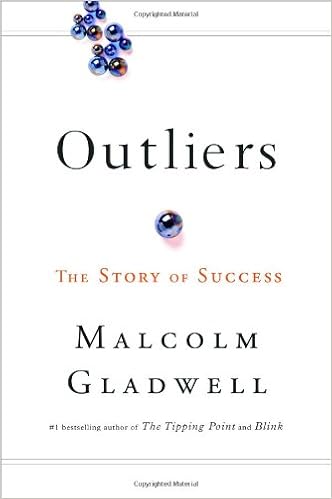

Outliers: The Story of Success 

The social problems with the 10k rule is that, people want things faster. 10k is a seemingly big number. Until you see that a college 4 years is close to 10k hours. Of course in college you have a variety of classes, at least 40-50, with 25 being a varied assortment of required courses. So you tack on a masters degree and you're closer to getting a focused 10k in a subject. But college does teach people on a broader passive way how to learn through instruction, rote, studying, research etc and hopefully the student will learn which style they excel at.
If you go to school for computers, you didn't spend enough time to achieve 10k, hence why an employer, acting as an advanced mentor would expose you to and train you in more.
Most educational systems attempt to be broad so that its generally individualistic learners who can pursue 10k of hours because they can devote 100% of their time to say writing without being required to go to a math or science class or vice versa.
I walked into undergraduate school at 21 with a dozen full manuscripts of 250 plus pages each. I had a previous ten to fifteen years of writing tons of things--essays, newsletters, articles, poetry, plays, comic scripts, short stories, long stories, story boarding so I was advanced for an undergrad writer who then wrote for four ongoing magazine, journal, newspaper and chap books plus submitting to magazines and getting published nationwide. By my sophomore year I came to understand how the structure of school was hindering me so I padded my schedule with five reading and writing courses to one required course plus I worked as a TA for two award winning writer professors and was deeply invested in the works of others in group classes. Mentors and practical experience on the work of others taught me to write better. But I would estimate I walked in at 5000 to 7000 hours. Its not the number 10, 000 its the kind of work, exposure, variety, mentorship one gets that makes the 10k worth expertise.
Several friends /classmates wanted to be writers and I later came to understand experienced jealousy and envy at my advanced work and being picked by the professors to be their TA, one hadn't had one in over fifteen years because she judged students as not ready. She offered me the job because I had advanced myself---one by writing so much and two by reading so much. My grandmother read five books a week and I was always trying to keep up. I read my first adult book at 10 and didn't think I would get to college so I went to Barnes and noble and started at A, assuming that the books I did read I would encounter if and when I got to college. Two years of intense college level focused reading propelled me further from my normal prodigiousness to a more intense specialist level. I was ripe for the next necessary component of 10,000 expertise, intense attention from acclaimed, accomplished masters.
But you'd have to be both the viewer and a trained engineer to see that. I was teaching for years in a variety of corporate and adult then children then creative ways before I specifically have been able to identify teaching expertise and I'm still learning. But there came a point where I directly had to seek out mentors again, I would estimate at about 8000 hours of pure teaching but once I did work with them within a year I was a recognized expert by another expert who observed me teaching cold.
Even now with a mix of about 45k of hours in writing, teaching and reading I'm still learning and fascinated by what another twenty years will garner. But I do know its not a pure 10k of hours unless you start early, build and adjust your own learning by understanding learning levels.
To the point of a short span, I took about a dozen computer courses after undergrad...ms office, PhotoShop, illustrator, quark, Page Maker, Java, html, JavaScript from beginner to advanced level then years later formal desktop support tech classes and systems administrator. I taught ms office to ms Office / expertise certification level for about 100 students in 5 of the programs, I even figured out how to certify thru the Certiport system without it stumping my students but instead testing them...there was a big ethical question because no one else , ever had figured out the ms Office certification test from the "underside" enough to teach others how to apply their knowledge. Yes, I'm being purposefully vague, my students had been in class for nine months, they'd earned certification in spite of Certiport’s byzantine structures.
Truthfully I found the rote teaching dull. I was fantastic at it, the company sneaking in two IT guys to the class to test me...but I can "see" the screens in my head so I can multiple times teach and advance. I was so bored I would buy DVDs of like Access to play a lesson for class while I went for a walk. However I am not that interested in computers. I possess an intermediate to advanced level learned skill at them but lack emotional interest and passion for them. I've never sought out a computer mentor though I've had great teachers and with all my schooling and teaching of them and lesson planning and seven years of office work temping I have at least 15,000 hours. I've never progressed to a true level of expertise because I don't care to but as I go to class for Premiere CC I bring that ability to bear so that I'm almost advanced as just a beginner, I know the software ought to be able to do what I envision because i know folk brighter than me made and update it, its just a matter if my finding the right sequence. I lack the skill from having done thousands of hours of projects though I possess the skill of figuring out it can switch channels. I can feel the gap. But I use MS word to layout books, newsletters, magazines, brochures, posters, reports, etc from comfort when I intuitively know InDesign is what I should be using full-time. I can feel Words gap.
Expertise involves intuitive innovation, it almost can't be explained in words because its so instinctive now. That's what the 10,000 true hours impart, instinctively innovating.

www.kyle-phoenix.com

Smile, Kyle
KylePhoenixShow@Gmail.com
#KylePhoenix
#TheKylePhoenixShow
Kyle Phoenix on Facebook and Twitter

The Kyle Phoenix Show LIVE STREAMING on MNN.org 1130pm, Spectrum Cable Manhattan, NY Channel 56 & 1996, also FIOS 34 and RCN 83. 

www.kyle-phoenix.com

Smile, Kyle
KylePhoenixShow@Gmail.com
#KylePhoenix


You can Like or; Follow Us on Facebook or;Twitter

Or Click Below to:
·                     Kyle Phoenix Website
·                     The Kyle Phoenix Blog
·                     Check out Kyle Phoenix Products on Amazon .com


 Don't forget to watch The Kyle Phoenix Show LIVESTREAM on Channel 56 (Time Warner), 83 (RCN), 34 (Verizon) Thursdays 1130pm

Kyle Phoenix is a teacher, certified adult educator, sexologist, sex coach and sexuality educator with over two decades of intensive experience. He studied at the University at Buffalo, SUNY, New York University, and Columbia University. He has worked, consulted and taught individuals and focused professional developments for the CDC, Department of Education, Gay Men's Health Crisis, New York City Department of Health, non-profits, Fortune 500 companies and unions. He began his career facilitating on-campus workshops addressing a wide range of sexuality and sexual health issues and then moved on to teaching at universities, non-profits, private groups and clients, hosting The Kyle Phoenix Show on television and multiple online webinars, including YouTube and Sclipo and writing extensively through his blog, Special Reports, articles and other print and E books in the Kyle Phoenix Series on relationships, finance, education, spirituality and culture. He lives in New York with his family.

www.kylephoenix.com

Smile, Kyle
KylePhoenixShow@Gmail.com
#KylePhoenix
#TheKylePhoenixShow


You can Like or; Follow Us on Facebook or;Twitter

Or Click Below to:
·                     Kyle Phoenix Website
·                     The Kyle Phoenix Blog
·                     Check out Kyle Phoenix Products on Amazon .com


#KylePhoenix
#TheKylePhoenixShow


Monday, October 29, 2018

Would Malcolm Gladwells 10,000 hour rule apply in math and the principles surrounding the engineering practice? Answered by Kyle Phoenix


Kyle Phoenix
Kyle Phoenix, At 40,000 plus hours, 2016
Howard Gardner and Robert Greene write on this as well in looking at development of intelligences. To overly simplify the problem with static science is that you must learn the basics, the mediums and the advanced before you can contribute creatively. The posit is this is why writers and musicians (Dylan Thomas, Jimi Hendrix, The Beatles, John Coltrane, Miles Davis) can achieve giant innovative leaps at a younger age then scientists. Scientists must learn, then experiment then be peer reviewed by the domain itself/and teachers which can all take decades. One might achieve mastery but exampling it in the sciences takes longer and is often collaborative.
In a Kanye or a Beck or a Prince or Bjork we can see their mastery and innovation because there's less to master and once the basics are understood, experimentation generally begins. I would expect that experimentation begins after about 2500 hours of practice because in art and music you can extrapolate backwards and forwards without having to master the advanced permutations you're seeing. You can also unconsciously master/absorb connected knowledge. I once diagrammed a sentence in front of a class and I was shocked because I hadn't deliberately done in years but I was so familiar with all of the parts of speech through reading and writing that I "knew" it.
In math and science one can't skip around in the same ways and still achieve a mastery synthesis.


www.kylephoenix.com

Smile, Kyle
KylePhoenixShow@Gmail.com
#KylePhoenix
Kyle Phoenix Answers


You can Like or; Follow Us on Facebook or;Twitter

Or Click Below to:
·                     Kyle Phoenix Website
·                     The Kyle Phoenix Blog
·                     Check out Kyle Phoenix Products on Amazon .com


Sunday, July 8, 2018

Kyle Phoenix Answers: Is being a genius a matter of education?


Yes. But it would have to be deliberate. There is no such thing as spontaneous genius. What there is is practiced genius. Humans have applied this misnomer to genius because It rarefies the intelligent and lets the lazy off the hook. 


"Oh, I'm not smart enough"

No, you have not applied yourself and then designed a strategy to ever improve or kaizen, CANI (constant and never-ending improvement.)

To become a genius one would need access to a breadth of information that scales in complexity, a teacher-coach that is either at mastery level in the subject itself or in the art of teaching and time, time to absorb, reconsider, postulate, get feedback, repeat.

People often site people like Mozart but his father was a composer (teacher-coach) who basically whored his children out across Europe as prodigies, however their skill was rote, just unusual for children at that time. Consider children now on YouTube, who have focused exposure to a specific skill, they will be able to perform it but genius requires time-----time to master a domain (absorb) and learn the basics, rules, constraints and levels. Then true, first level creativity begins.
First level needs thousands of hours of coached practice, still possible for a child getting 2000 hours a year. But what would a child of 5 look like to an adult if that child had 2000-6000 hours of practice, exposure by age 6? Most adults largest time to skill exposure is k-12 (180 x 8 hours x 13 years)---18,720 and it's in a scattered generalized curriculum. Ergo , anyone who could example roughly 2000 in a single skill/area would appear to be a genius to 2/3s of just the American population where only 1/3 are educated past high school level.
Imagine meeting someone who just spent 2000 more hours absorbed in math or literature or learning Spanish than you have?

Now imagine it gets ever more complex. You spent a total of maybe your entire basic education, 1800 hours and they spent twice as much in 18 years or more jarring by the time they were 6. They'd appear geniuslike to you.

Consider this: What else did Mozart, Prince, Michael Jackson have to do as children/teenagers but work on music, learn music, perform----all of them raised by demanding musically proficient fathers----what else were they allowed to become?


Genius is then only genius in novel, creative usage once domain absorption has taken place, hence Mozart's lackluster in-between years and later explosion of talented pieces. Generally the first creative explosion is late teens to 30s. There are less new thoughts in certain domains like math, science, computers because you can't skip, you must learn/master a regimen of fundamentals to graduate to the next levels. Art, literature, music, film allows more genius because it allows you to jump and gather through multiple skill levels. You can study schlock, basic, repetitive and experimental without having to master film-making to understand the differences.

I'm running a side project to align to my work in how to accelerate students, the side project is what became of all the geniuses in my writing classes undergraduate? In tracking them down and in getting them to answer questions what I've learned is that only a handful of us passed through those writing classes as writers. By that I mean I was writing at an advanced level for ten solid years before undergrad in all genres, several others as well. The vast majority of my writing classes classmates wrote primarily for the classes, newspaper, magazines then petered out. The very exposure of the class and teachers and literature and time taught them to break some boundaries to example moments (short projects) of creativity. But without the coaches, time and intrinsic pressure-ambition to keep writing, they petered out.

However several others like me had been writing, wrote all through undergraduate and continued the same grind afterwards seeking out more mentors, ever more complicated work, became some form of teachers themselves----the teaching practices like a multiplicity of hours 1 equals 3 because of exposure and review of fundamentals.
Image result for phoenix
Voltaire posited that the first burst happens after 10-15 years of studying a domain and then you get 10 years minimum to mastery your first level of Mastery. Then you have to start again, anew. This is at approximately 20,000 hours because you have feedback from the domain itself.
Then you have to learn anew which is often the most difficult, you can't do what you're good at to get to the next level if you keep producing Level 1. This is how some people seem to do the same kind of work again and again and again. The advice from Voltaire and others Is when celebrated to step away and master a domain neighbors to your skill.

Voltaire pointed out that this is why people who aren't geniuses fail because we as humans have such a short life span. You get maybe three of these Mastery stages and you can get stuck at Level 1 because it is so intoxicating to finally be recognized, you don't want to become the apprentice again. So you coast.

Genius then is when practice, ever increasing complexity, time, coaching and self reflective challenging converge continuously.

But most people won't work for that.

Smile, Kyle
KylePhoenixShow@Gmail.com


You can Like or; Follow Us on Facebook or;Twitter

Or Click Below to:
·                     Kyle Phoenix Website
·                     The Kyle Phoenix Blog
·                     Check out Kyle Phoenix Products on Amazon .com

·                     Email: KylePhoenixShow@Gmail.com

Thursday, October 25, 2012

Outliers by Malcolm Gladwell, Book Review


When I consider what to review it generally happens in two ways:I look at my bookshelf and I look for something that impacts me immediately.  This book qualifies for both.  I even went so far as to stay up until 5am one morning to watch Malcolm Gladwell on CSpan give a speech about his incredible book, Outliers.  Simply put Outliers are people who through stand out from the crowd because of a talent.  It's a great system for figuring out where you are in whatever it is you like or even more importantly how to achieve (and understand others achievement).  The magic number is 10,000 hours of practice that purposefully increase sin complexity.  With just that information you can understand Bill Gates, Raymond Federman, Nina Simone, Mariah Carey, Madonna, Toni Morrison, Bill Cosby, Nikolai Tesla, Carlene Hatcher Polite, Oprah Winfrey, Ervin Laszlo and a host of others.  We look at these people as having a genius or a superior talent but we rarely consider how that talent got nurtured, developed and blossomed to what we see today.

In undergraduate college I really started getting published around the country.  For four years I was a Teacher's Asst. to three professor's, all three focusing heavily on creative writing, I took close to 80 credits of just writing classes (prose, journalism, poetry even playwriting), I was often weekly in not just the campus newspaper but the campus magazine, chapbooks and even the graduate school literary magazine.  Professors began recommending me to publishers and magazines around the country.  I even had the surprising pleasure of going into a bookstore, picking up an interesting looking magazine and finding one of my short stories in it.  Friends and classmates assumed I had some sort of dark genius that was being reaped upon the university but in fact since the age of 12 I'd been writing diligently.  For about 10 years time I'd written comic book scripts and manuscripts and poems and essays so that by the time I got to college at 21, I'd had 10 years of writing experience, my heaviest work being being done with Denise Donnelly, Debbie Freeman and Dr. William Hunter at John Jay High School.  What appeared to be an amazing well spring was in fact my arriving at college with 10,000+ hours of writing experience under my belt.  By the time I arrived at the university I was ready for high level instruction in writing because I'd mastered the basic form but to the other students who were just beginning their 10,000+ journey (if they were going to stick to it at all), I seemed far ahead.  I often felt excluded from the students' level of ability and more comfortable with the teachers because I had gathered so much more experience.  Outliers was finally able to quantify for me why.

Now transfer this algorithm to another skill, any skill, that might be achieved in college.  Working 40 hours a week is approximately 2000 hours a year.  College, full time study, is the equivalent of working full time for 4 to 5 years.  Boom!  10,000 hours.  Wait for it---now graduate school is where one achieves their "Master's" degree because you've graduate from being a novice/intermediate to now a level of mastery.  Outliers has wonderful case by case outlines of people who've attained mastery and an examination of how and why, even down to examining the preponderance of Jewish doctors and lawyers and how that can be traced back to family origin and 10,000 hours.  Use this book to examine yourself or understand how to fill in the blocks of your own study.


Remember mastery is achieved by a 6 Step Process (outlined in Mastery by Robert Greene---I'll be posting it's review as soon as it comes out in November):

1. Discover your calling: the life's task
2. Submit to reality: the ideal apprenticeship
3. Absorb the master's power: the mentor dynamic
4. See people as they are: social intelligence
5. Awaken the dimensional mind: the creative-active
6. Fuse the intuitive with the rational: mastery


Thank you!
Kyle Phoenix
kylephoenixshow@aol.com
http://kylephoenixsite.com/
Thanks and enjoy! You can Like Us/Share this post on FaceBook, LinkedIn, Google+ or Follow Us on Twitter! Don't forget to watch The Kyle Phoenix Show on Channel 56 (Time Warner), 83 (RCN), 34 (Verizon) and the Thursday/Friday 12am/midnight simulcast on http://kylephoenixsite.com/